
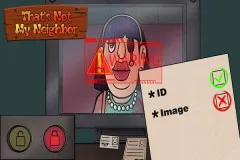
That’s Not My Neighbor
A knock at the door sounds normal. In That’s Not My Neighbor, it can be a warning. You work at the entrance of an apartment building where every visitor may have something to hide. Your job is to decide who belongs inside.





Who Is Behind the Door?
A knock at the door sounds normal. In That’s Not My Neighbor, it can be a warning. You work at the entrance of an apartment building where every visitor may have something to hide. Your job is to decide who belongs inside.
This horror puzzle game does not depend on constant chasing. It builds tension through small details. A wrong name, strange document, or unusual feature can turn an ordinary visitor into a serious threat.
Explore That’s Not My Neighbor Rules
Controls
- Interact and Select: Left Mouse Button
- Inspect Documents: Hover Mouse Cursor
- Defend Lobby: Right Mouse Button (Select versions)
The Door Is Your First Puzzle
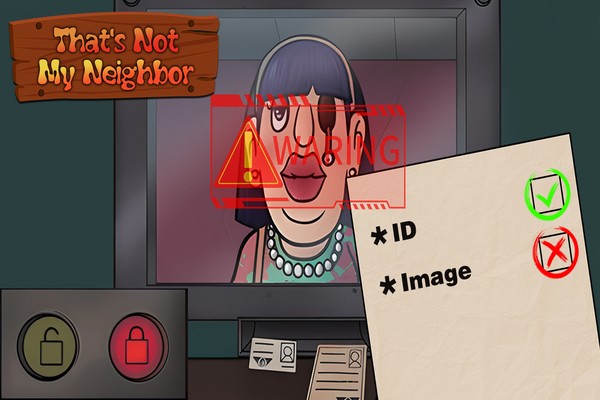
Your shift starts with a visitor standing at the entrance. The first task is to check their information. Look at their ID, compare the name and apartment number, and check whether the details match the building records.
Next, study the visitor carefully. Their face, clothes, behavior, and other small details may reveal something unusual. A doppelgänger can look almost identical to a real resident, so one detail can matter.
You can also ask questions when something feels wrong. Use the information available to you and compare the answers with the visitor's documents. Do not rush the decision. A suspicious answer can give you another reason to investigate.
The final task is making the call. Let a genuine resident pass when everything checks out. Stop suspicious visitors when the evidence does not match. Some dangerous encounters can also require a more direct response.
Small Details Can Expose an Impostor
The interesting part is that there is rarely one obvious clue. You may need to combine several small pieces of information.
Check the paperwork first. Then compare it with what you see at the door. If the apartment number looks correct but another detail feels strange, investigate further.
This creates a simple but tense loop: inspect → compare → question → decide. Every visitor becomes a small case.
What Makes That’s Not My Neighbor Uncomfortable?
The strongest moments are often quiet ones. You may be looking at an ordinary visitor while trying to decide if something is wrong. There is no easy way to know immediately.
That uncertainty is the core challenge. You are not only solving a puzzle. You are deciding whether the evidence is strong enough to trust someone.